Aptos Coastal Development Permits and Your Home Sale Timeline
August 20, 2026
August 20, 2026
A buyer's inspector flags a deck railing that needs replacing before close. The seller says fine, we'll swap it out this week. Then the contractor asks for the property's coastal permit file, and there isn't one.
This is the pattern that repeats across Rio Del Mar, Seacliff, Seascape, and the Beach Drive enclave every year, and it rarely shows up in the numbers buyers pull off a portal. The median price tells you what the house costs. It tells you nothing about whether the house can legally be touched without a hearing first.
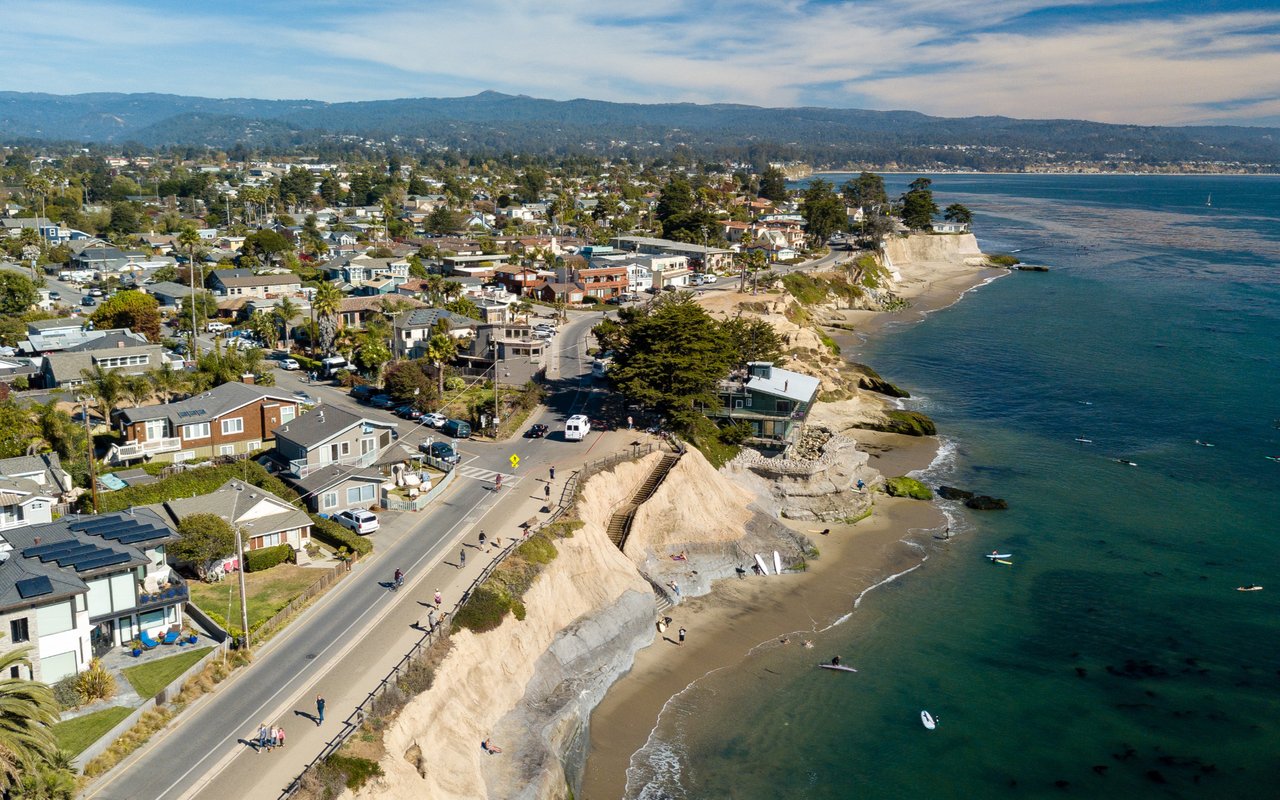
Ask most buyers where the Coastal Zone starts in Aptos and they will point at the sand. The actual boundary is drawn by Santa Cruz County, and south of Capitola it runs all the way inland to Highway 1. That means the zone doesn't just cover Beach Drive and the oceanfront blocks along Rio Del Mar. It covers most of the residential grid between the highway and the water, including a good share of Seacliff and inland Rio Del Mar streets that never see a wave.
Anyone shopping strictly by "is it on the beach" is answering the wrong question. The right question is whether the parcel sits inside the Coastal Zone boundary at all, and for a large share of Aptos, the answer is yes.
Inside the zone, a Coastal Development Permit may be required. Santa Cruz County guidance lists replacement after a disaster and improvements to an existing dwelling as exemptions. Both sound like they'd cover a routine remodel.
Here's the condition that trips people up. The improvements-to-existing-dwellings exemption only applies if the home already had a coastal permit when it was built. If it didn't, there's no exemption to fall back on. The project needs a first-time Coastal Development Permit, full stop, regardless of how minor the work is.
That single sentence in the county's own coastal zone guidance is the hinge the rest of this article turns on.
Rio Del Mar was subdivided in the 1920s, but most of its houses date to the 1940s. The California Coastal Act that created the permit system didn't exist until 1976. Do the arithmetic and a large share of the oldest, most desirable beach-block homes in Aptos predate coastal permitting entirely. Nobody applied for a Coastal Development Permit to build them because there was no such permit to apply for.
That doesn't make these homes illegal. It means that when an owner wants to add a bathroom, extend a deck, or build an ADU, the county can't wave it through under the existing-dwelling exemption, because there's no original coastal permit on file to prove the home qualifies. The project defaults to a first-time CDP application.
A Coastal Development Permit application in Santa Cruz County goes through either a Level 4 or Level 5 review. Level 4 requires public notice. Level 5 requires a public hearing in front of the Zoning Administrator. Neither is instant, and unlike a standard building permit, you can't shorten either one by paying extra or hiring a faster contractor.
According to Do I Need a Permit?, general guidance for permitting in the Santa Cruz coastal zone puts the added review time at roughly 4 to 12 weeks on top of a normal building permit timeline, once a property falls inside the zone. On a coastal Aptos listing where every week of delay is a week of carrying costs, that's not a rounding error. It's the difference between a June closing and a September one.
New ADUs get a partial break. They still require a Coastal Development Permit, but the county processes it concurrently with the building permit application rather than as a separate standalone review. It's faster than a full remodel CDP, but it's still a coastal filing, and it still depends on the same underlying question: does this parcel have permit history to lean on, or not.
| Situation | Review path | Rough added time |
|---|---|---|
| Improvement to a home with a documented original coastal permit | Exemption applies | |
| Same improvement, no record of an original coastal permit | First-time CDP, Level 4 or 5 review | About 4 to 12 weeks |
| New ADU on any coastal zone lot | CDP required, processed alongside the building permit | Less than a full CDP, but not zero |
| Project inside the Appeal Jurisdiction band | Subject to Coastal Commission appeal even after county approval | Open-ended while the appeal window is live |
Even a fully approved county permit isn't the finish line everywhere. Certain locations sit inside what the county calls the Appeal Jurisdiction, and if your parcel is in it, an approved coastal permit can still be appealed to the California Coastal Commission. Santa Cruz County's Coastal Development Permits page lists these triggers: a lot located between the sea and the nearest public through road, within 300 feet of a beach, high-tide line, or coastal bluff top, or within 100 feet of a stream, estuary, or wetland inside the Coastal Zone.
Santa Cruz Local reports that most local land use appeals require a fee.
Beach Drive is the clearest illustration of how long these questions can stay open. In 1979, a buyer purchased a beachfront lot there and applied to build a home. The Coastal Commission approved the permit on condition that he dedicate a public access easement across part of the property. He objected, litigated, and the case, Grupe v. California Coastal Commission, worked its way through construction, a federal civil rights trial, and an appellate decision that wasn't resolved until 1985, six years after the original purchase.
The underlying question on that block never fully closed. In September 2025, a California appellate court issued a decision in Weseloh v. County of Santa Cruz, addressing the county's public right-of-way interest behind some of these same Beach Drive homes. Four decades after Grupe, the access and easement questions tied to this specific stretch of oceanfront Aptos real estate are still being litigated.
None of this means every Aptos coastal listing carries legal baggage. It means that for this particular pocket of the market, recorded easements and access history deserve the same scrutiny as the coastal permit file, and neither question resolves itself just because escrow is moving forward.
The lesson from Beach Drive isn't that coastal Aptos property is risky. It's that on this specific stretch of coastline, the paperwork behind the house can be older and more contested than the house itself.
If my home was built in the 1940s, is it automatically a problem? Not automatically.
Can a neighbor really appeal my project after the county already approved it? Yes, if your parcel sits inside the Appeal Jurisdiction band.
Does this apply to condos in Seascape or attached homes? HOA-governed buildings often have their own history of coastal filings worth reviewing alongside your individual unit's records.
If you're weighing a sale in Rio Del Mar, Seacliff, Seascape, or anywhere along the Aptos coastline, the permit file matters as much as the paint and the price. Natalie Pinkerton can walk through what your specific parcel's coastal zone status and permit history mean for your timeline before you list, not after an inspector asks a question nobody planned for. Schedule a local market consultation and get the calendar right from the start.
This article is general information, not legal, tax or financial advice. Consult a qualified professional about your situation.
Stay up to date on the latest real estate trends.


Get help evaluating a property’s current value, preparing a strong offer, navigating contracts, negotiating terms, and more. I’m here to guide you through every step of your home-buying journey.
NATALIE PINKERTON | CA DRE# 01943205
1041 41ST AVE SANTA CRUZ, CA 95062