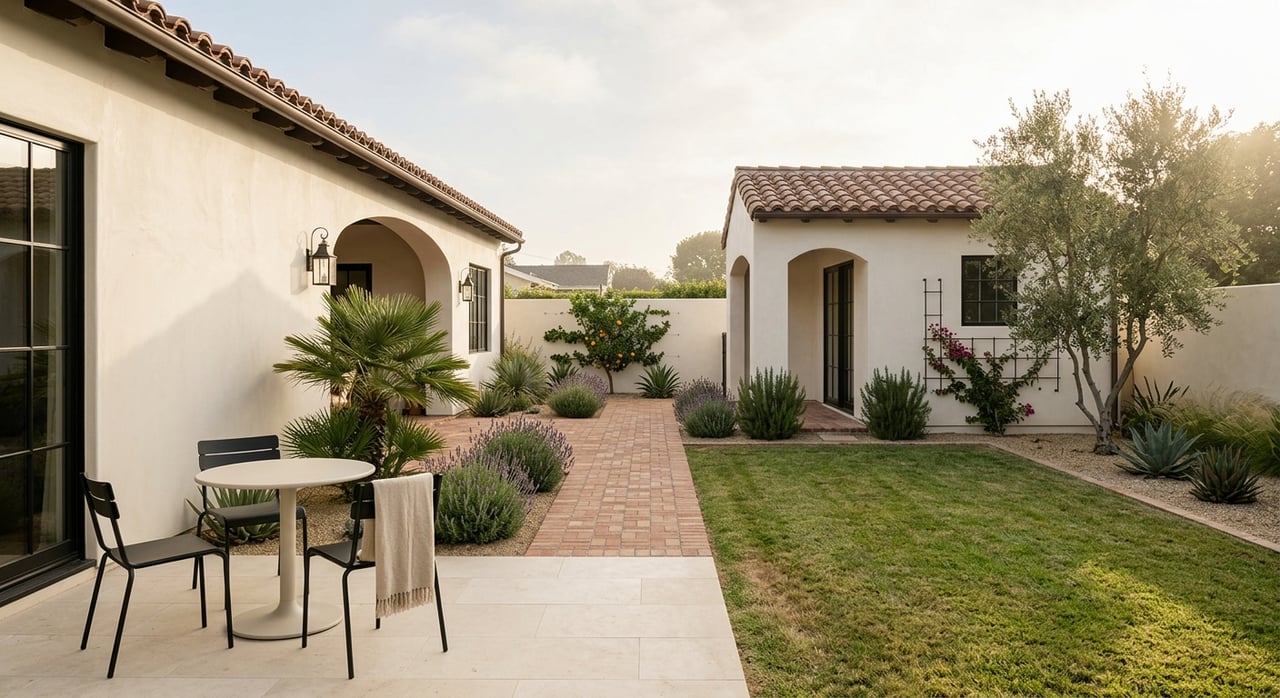
Understanding Watsonville ADU Home Potential
July 2, 2026
July 2, 2026
Thinking about adding more living space without giving up the Watsonville home you already love? An accessory dwelling unit, or ADU, can be one of the most flexible ways to create room for extended household needs, support long-term rental income, or make your property work harder for you. If you are wondering what is actually allowed, what tends to pencil out, and where Watsonville homeowners can run into surprises, this guide will help you sort through the basics. Let’s dive in.
In Watsonville, an ADU is a self-contained residential unit on the same parcel as a primary home, with its own kitchen, sleeping area, and bathroom. The city recognizes detached ADUs, attached ADUs, conversion ADUs, and junior accessory dwelling units, also called JADUs.
This matters because adding an ADU is not just for oversized lots or brand-new homes. Watsonville allows ADUs on residential properties that already have a single-family home, duplex, or multifamily building, while JADUs are limited to single-family homes.
For many homeowners, the appeal is flexibility. A well-planned ADU can create space for multigenerational living, support aging in place, or provide an option for long-term rental income.
It can also make your property more adaptable over time. While no future value outcome is guaranteed, many buyers do see added flexibility as a meaningful feature when comparing homes.
Choosing the right type of ADU usually starts with your lot, your existing structures, and your goals. In Watsonville, several paths are especially common.
One of the most practical options is converting space you already have. Garages, storage areas, attics, basements, and similar areas may be used for a conversion ADU.
This route can be appealing because Watsonville does not require replacement parking when an existing garage, carport, or covered parking structure is converted into an ADU. That can remove one of the biggest hurdles for homeowners who want to make use of underused space.
A detached ADU is the classic backyard cottage setup many people picture first. This option gives the most separation from the main home, which can be helpful if privacy is a top priority.
That said, detached units still need to meet local rules for height, setbacks, and parking. The shape of your lot and the placement of your existing home can make a big difference in how feasible this option is.
If your yard is limited, an attached ADU may be worth a closer look. Watsonville allows attached units, including second-story ADUs added to an existing single-family home or detached garage if setback rules are met.
This can be a strong option when you want to expand living space but do not have much room to build outward. It often comes down to whether the existing structure and site can support the design.
A JADU is the smallest ADU-style option. In Watsonville, a JADU must be inside a single-family residence or an attached garage, cannot be detached, and is capped at 500 square feet.
For some homeowners, a JADU works well as a compact in-law setup or a modest long-term rental arrangement. It is important to know that JADUs come with more limits than full ADUs, including owner-occupancy rules.
Before you get too attached to one design idea, it helps to understand the local rules that tend to shape what is realistic. In Watsonville, a few stand out right away.
Watsonville reviews ADU and JADU projects ministerially. That means there is no public hearing, and the city reviews the application against objective standards.
This can make the process more straightforward than many homeowners expect. Still, straightforward does not mean automatic, especially if plans are incomplete or need several rounds of revisions.
According to the city, exempt projects need an Administrative Review Permit and a Building Permit before construction begins. Once an application is complete and meets requirements, an ADU should be approved or denied within 60 days.
The key phrase is complete application. Incomplete plans, missing documents, or repeated comments can stretch out the process, so preparation matters.
Watsonville does not impose a minimum lot size for ADUs. That opens the door for many property owners who might assume their parcel is too small.
The city also gives maximum ADU size guidance based on parcel size:
Setbacks can have a big impact on design. In Watsonville, conversion ADUs built within existing space, or in the same location and dimensions as an existing structure, generally do not need setbacks.
Most other ADUs typically need four-foot side and rear setbacks. This is one reason garage conversions and other reuse projects can be easier to fit onto a site than new detached construction.
Parking rules are often more flexible than homeowners expect. Watsonville generally limits parking to one space per unit or per bedroom, whichever is less.
Tandem and uncovered parking are allowed, and several common exemptions apply. Those exemptions may include units near transit and units created within the main residence or an accessory structure.
If you are comparing a full ADU to a JADU, occupancy rules are a major consideration. Watsonville says property owners do not have to live on site for attached or detached ADUs, but JADUs do require owner occupancy.
JADUs also cannot be used as short-term rentals and, if rented, must be rented for more than 30 days. Watsonville also says an ADU cannot be sold separately from the primary residence.
For many homeowners, the takeaway is simple: a full ADU usually offers more flexibility than a JADU. If long-term options matter to you, that distinction is worth understanding early.
Some of the biggest ADU questions have nothing to do with the floor plan. Utility connections, drainage, and site conditions can shape both cost and timeline.
Watsonville notes that separate utility connections may be required by the local utility provider. The city also says ADUs may not be attached to a septic system unless the Santa Cruz County Public Health Department approves it.
Some projects may also need added review for floodplain issues, grading or drainage work, or engineering-related submittals. These are the kinds of behind-the-scenes details that can change a simple idea into a more complex project.
Many homeowners assume cost is mostly about the size of the unit. In reality, the shell is only part of the story.
Watsonville charges fees for permit applications, plan reviews, special study reviews, inspections, and service connections. The city’s impact fee summary also includes sewer, water, groundwater, storm drainage, fire, school, park, and public facilities charges.
Unit size can be a major budget lever. Watsonville says no impact fees are imposed on JADUs or ADUs smaller than 750 square feet.
State guidance also supports that smaller ADUs and JADUs may be exempt from many local agency, special district, and water corporation impact fees, although school districts may still levy fees on larger units. For some homeowners, staying under that size threshold can significantly change the financial picture.
The city’s permit checklist is a good reminder that invisible work can be expensive. Floodplain review, grading or drainage work, structural drawings, Title 24 energy forms, and utility documentation can all add time and cost.
That means two ADUs with the same square footage may have very different budgets. A simpler site with easier utility access may be far less expensive to develop than a more complicated parcel.
Before you commit to plans, it helps to pause and get clear on the practical side. A little diligence upfront can save time, money, and frustration later.
Here are a few smart questions to ask early:
If you are adding an ADU to a property you plan to keep, the project is often about lifestyle and flexibility first. If you may sell in the future, it can also become part of your broader property strategy.
This is where local market context matters. Buyers may view an ADU differently depending on layout, privacy, parking, utility setup, and whether the unit feels truly functional rather than just added square footage.
A well-planned ADU can support a stronger property story, but that story works best when the design fits the parcel and the neighborhood context. Thinking through resale appeal from the start can help you make better choices about size, placement, and use.
If you are considering an ADU and want to understand how it may fit into your property goals in Watsonville, Natalie Pinkerton can help you think through the local market angle, property positioning, and next steps with a practical, neighborhood-savvy approach.
Stay up to date on the latest real estate trends.


Get help evaluating a property’s current value, preparing a strong offer, navigating contracts, negotiating terms, and more. I’m here to guide you through every step of your home-buying journey.
NATALIE PINKERTON | CA DRE# 01943205
1041 41ST AVE SANTA CRUZ, CA 95062