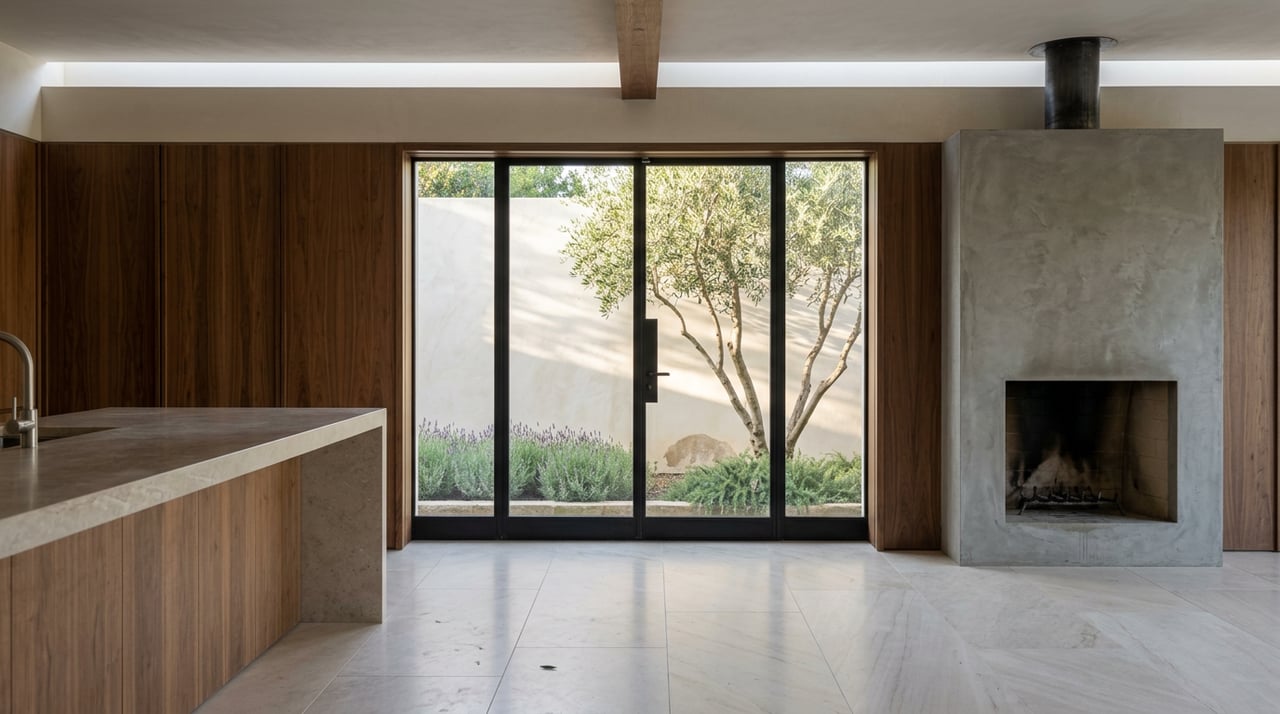
What an Acre in Corralitos Actually Costs You
August 13, 2026
August 13, 2026
A buyer touring Corralitos this summer put two listings side by side and could not make the math work. The first was a four-acre parcel off Hames Road with an old vine block, a working well, and deer fencing already up. The second was twenty-two raw acres a few minutes away, no structures, no irrigation, just hillside and oak. The smaller parcel cost more per acre. Not a little more. Substantially more.
That is not a fluke of one listing. It is how land pricing works in Corralitos right now, and it runs against the assumption most buyers carry into their first tour: that more acreage should mean a lower price per acre, the way a bulk discount works at the grocery store. In Corralitos, the opposite is often true, and understanding why changes how you should read every acreage listing you look at for the rest of your search.
Current Corralitos land listings, pulled as of August 2026, break into three rough categories, and each one prices dirt differently.
| Land type | What you are buying | Average price per acre |
|---|---|---|
| Raw undeveloped land | Bare acreage, no structures or systems | about $151,000 |
| House-and-land bundles | A home plus surrounding acreage | about $148,900 |
| Small farms and hobby-farm parcels | Smaller, already-improved agricultural parcels | about $250,700 |
Raw land and house-and-land bundles land close together, both around $149,000 to $151,000 an acre. That part makes intuitive sense: whether the acreage comes with a house or not, you are largely paying for the dirt and its location. The category that breaks the pattern is the smallest one. Hobby farms and small working parcels, the kind with existing infrastructure already in place, sell for roughly two-thirds more per acre than either of the larger categories.
If you assumed bigger parcels were always the better per-acre deal, this is the number that should make you pause before you write an offer.
The dirt itself is not the scarce thing in Corralitos. What is scarce is readiness.
Turning raw hillside into a producing agricultural parcel takes years and real capital: a well and irrigation system, deer and boundary fencing, county permits, and in the case of a vineyard, several years of vine maturity before the first commercial harvest. A buyer who purchases a small, already-improved parcel is not paying for acreage. They are paying to skip that multi-year runway entirely.
This is exactly the story written into the ground in Corralitos. Much of what is now vineyard here was something else first. The Corralitos Wine Trail notes that many of its member vineyards are planted on land "previously used to grow apples, strawberries, or other delicate fruit." The conversion from orchard or berry field to producing vineyard is the exact infrastructure investment that separates a $151,000-an-acre raw parcel from a $250,000-an-acre working one. Someone put in the years, the wells, and the trellising. The next buyer is paying for that work, not for the dirt underneath it.
The Corralitos Wine Trail itself is built on this idea: six independent, family-owned wineries clustered in a microclimate suited to cool-weather varietals. As reported by Lookout Santa Cruz, Richard Alfaro, who has been growing grapes in the area for a quarter century at Alfaro Family Vineyards, put the local climate simply:
"We have cool evenings and hot days."
That marine-layer swing between warm afternoons and cold nights is why Corralitos supports pinot noir and chardonnay in the first place, and it is why the small estate vineyards along Pleasant Valley Road and Hames Road, places like Storrs Winery, Windy Oaks Estate, Nicholson Vineyards, and El Vaquero Winery, hold value that a raw hillside a mile away does not yet have. The climate makes the land suitable. The decades of infrastructure make it valuable.
If you are shopping acreage in Corralitos, price per acre is only a useful comparison inside a category, not across categories. A few things worth checking before you use that number to judge a deal:
None of this means raw land is a bad buy. For someone planning to build over several years, the lower per-acre cost may be exactly the right trade. But it is a different trade than buying a hobby farm that is already producing, and the price per acre only tells you which trade you are making if you know which category you are looking at.
The land data does not exist in isolation from the general Corralitos housing market, and the two are moving somewhat differently right now. In July 2026, Corralitos homes carried a median list price of about $1.35 million, down roughly 7 percent from the prior month and about 6 percent from July 2025. Median price per square foot came in near $639, down about 11 percent from the prior month and 10 percent from a year earlier. Homes spent a median of 78 days on the market, about the same pace as a year earlier.
That is a cooling signal for the general housing stock. But nothing in the land data suggests the same discount is reaching improved agricultural parcels. Raw land and house-and-land bundles track the broader softening, priced in the $148,000 to $151,000 per-acre range regardless of size. Small farms with existing infrastructure are still commanding a premium. The scarcity is not in Corralitos real estate generally right now. It is specifically in parcels that already have the years of development work built in, and that scarcity does not soften just because the overall median does.
For a buyer comparing Corralitos to other Santa Cruz County acreage, that is the number that should reset expectations. A softer overall market does not mean a softer market for the specific kind of turnkey agricultural parcel that took someone else a decade to build.
Does a bigger parcel always cost less per acre in Corralitos? Not currently. Raw land and house-and-land bundles both average close to $149,000 to $151,000 an acre regardless of size, while smaller improved hobby farms average closer to $250,700 an acre. Size alone is not what drives the per-acre price.
Why do small working farms cost more per acre than raw hillside? The premium reflects infrastructure already in place: wells, irrigation, fencing, permits, and in many cases mature vines or orchard trees. A buyer purchasing an improved parcel is paying to skip the years of development that a raw parcel still requires.
Is the general market slowdown showing up in land prices too? Only partly. Overall Corralitos home prices softened in July 2026, but improved agricultural parcels have not shown the same discount. The scarcity is concentrated in already-developed acreage, not in Corralitos real estate broadly.
If you are trying to figure out which category of Corralitos acreage actually fits your plans, whether that is a vineyard-ready parcel, a raw hillside to build on, or a working small farm, the per-acre number only means something once you know what you are comparing it against. Natalie Pinkerton has spent years reading Corralitos land deals block by block and can walk you through what a specific parcel's price actually reflects. Schedule a local market consultation to start with the comparison that matters for your search, not the one a single average obscures.
Stay up to date on the latest real estate trends.


Get help evaluating a property’s current value, preparing a strong offer, navigating contracts, negotiating terms, and more. I’m here to guide you through every step of your home-buying journey.
NATALIE PINKERTON | CA DRE# 01943205
1041 41ST AVE SANTA CRUZ, CA 95062