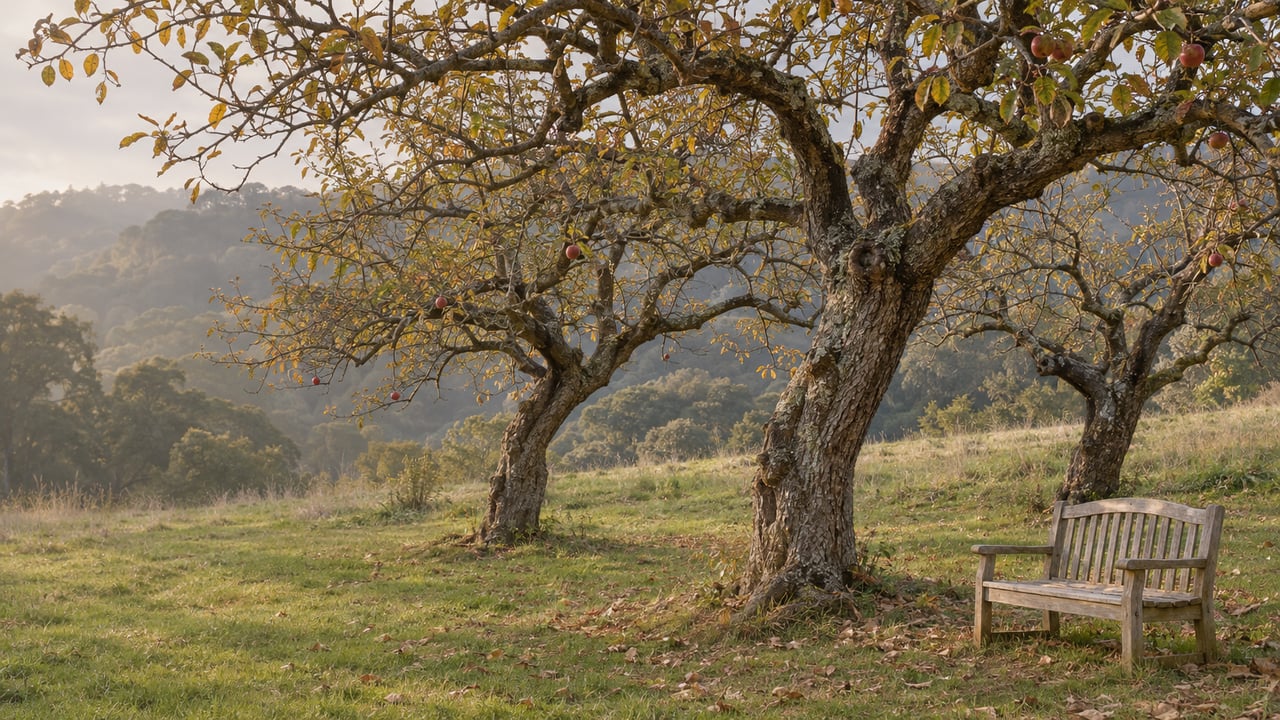
For Corralitos Homes With Apple Orchards, the Fruit Needs a New Buyer
November 19, 2026
November 19, 2026
"It didn't make financial sense, frankly. The ground is more valuable for other crops." Jim Rider said that to Lookout Santa Cruz this July. He was explaining why Bruce Rider & Sons, the county's last apple-packing house, closed more than a decade ago and now sits surrounded by wine grapes on Freedom Boulevard.
For most of the last century, an orchard behind a Corralitos farmhouse came with a buyer. That changed in 2026. If you are touring Corralitos homes this winter and one of them has a block of Newtown Pippins out back, value those trees as part of how you want to live on the land. Don't count on them as an income stream that comes with the deed, and expect the ground under them to keep drifting toward the crops that pay most per acre in this valley.
For decades, nearly every apple grower in the Pajaro Valley sold to one company: S. Martinelli & Co., founded in Watsonville in 1868. According to Lookout Santa Cruz's June 2026 reporting, the company bought the fruit and often supplied the systems around it too. That meant contract pickers and pruners, leased equipment too expensive for small growers to own, and materials for pest control and yield.
Over the 2025–26 winter, growers told Lookout, Martinelli's said it would stop renewing their contracts over the next few years. One fifth-generation grower farming more than 100 acres in Corralitos told the outlet that his set-price contract runs through the 2027 season and will not be renewed after that. Growers also said the company had declined to renew orchard leases around the area.
Martinelli's president and CEO, Gun Ruder, would not discuss sourcing. In an email to Lookout, he said the company had planted 250 local acres of apples over the past decade and that "our long-term commitment to growing and sourcing apples in the Pajaro Valley continues." Growers also told Lookout that Martinelli's leases and owns orchards of its own in the valley.
For someone buying a house, the open-ended guarantee is what changed. A few acres of Pippins once had an obvious place to go every fall. Today the trees need a plan from whoever owns them.
The county's annual crop reports tracked the shift before the contract news broke. Santa Cruz County apple acreage went from 1,945 acres in 2022 to 1,879 in 2023 and 1,790 in 2024. The 2025 Crop Report, released Sept. 30, 2026, puts apples at 1,610 acres for 2025, about 10% fewer than a year earlier.
The remaining trees produced more in 2025, with yield rising from 18.33 to 20.68 tons per acre and the average price from $406 to $420 per ton. Still, a stronger year for apples did not slow the removals, because an acre of berries in Santa Cruz County grosses about ten times what an acre of apples does.
| Crop, 2025 | Acres | Gross value per acre, before costs |
|---|---|---|
| Apples, fresh and processed | 1,610 | roughly $8,700 |
| Wine grapes | 524 | roughly $8,700 |
| Berries, all types | 5,350 | roughly $91,600 |
These come from the 2025 Crop Report. The apple figure is 20.68 tons at $420 a ton. The grape figure is 2.77 tons at $3,149 a ton. The berry figure is $490.25 million spread over 5,350 acres. The county counts these as gross values, before labor, irrigation, harvest, cooling and marketing, so the table compares revenue, not profit.
Rider explained it to Lookout. The valley's cool coastal climate stretches the berry and vegetable season into months when it is too hot to grow them elsewhere. Most remaining orchards are older plantings, and few growers ever grafted over to modern fresh-market varieties. "The difference here is that it just doesn't make sense to plant new orchards," he said.
In June, Lookout reported that a fourth-generation Pajaro Valley grower had begun pulling trees over the 2025–26 winter, including an orchard on Freedom Boulevard that his family planted in the 1920s. The plan for 2026 was to lease the cleared ground to Aptos Berry Farms, a subsidiary of Reiter Affiliated Companies.
Late November is when this kind of change becomes visible. Harvest is over and the trees are bare, and winter is when growers do the pulling. If you drive Freedom Boulevard between Watsonville and Corralitos this season, you may pass a parcel that was an orchard last spring and is bare ground now.
For a buyer, this helps answer what the ground around a home is likely to become. A Corralitos property next to a working orchard may sit beside berry rows in a few seasons. If the property has its own orchard, its owner may get offers to lease that ground to a berry grower. Neither outcome is certain, but the county numbers and the Freedom Boulevard clearing both point the same direction.
There are still buyers for local fruit, but at a smaller scale. Santa Cruz Cider Company and Tanuki Cider are both Watsonville cideries. Lookout reported that Santa Cruz Cider pays around $600 a ton for local fruit, compared with about $400 from Martinelli's. The cidery keeps an apple shed in Corralitos, where co-owner Nicole Todd stores apples and presses them for cider through the year.
The higher price comes with a ceiling. Todd told Lookout that the company runs with a team of three, which limits how much fruit it can take on. In the same story, a grower who sells to the cideries said those sales depend on the volume, cold storage, tractors and labor he already has. A few acres behind a house come with none of those, so a small orchard owner selling to a cidery also has to work out picking, bins and delivery.
Institutions have looked into it as well. Lookout reported in June that Live Oak School District and the nonprofit Grey Bears had talked with a local grower about buying Pajaro Valley apples. Those talks were about bins per week, not orchards per season.
The orchard model that holds up in this valley sells directly to people who come out to the farm. Lookout points to Gizdich Ranch and Prevedelli Farms, both long-standing family farms that sell directly to the public and make value-added products such as pie, juice and jam. Prevedelli also sells at 10 weekly Bay Area farmers markets from May through the end of harvest. Gizdich's 2026 U-pick season has closed, but its pie shop, deli and apple juice are still going, with posted hours of 9 a.m. to 5 p.m. daily. Todd has suggested U-pick days and events to the growers who call her.
H.A. Rider & Sons, the Rider family's juice press on Freedom Boulevard, is also still running. According to Lookout, it is the last press in the area that fills custom orders. If you want an orchard for cider, juice to give away at the holidays, or a fall picking day with friends, it's useful to know where that press is.
A Corralitos orchard is worth what it is worth to the way you plan to use the land.
If you love the trees, the orchard has real value to you, and Todd described it well. "A Gravenstein on Pioneer Road is going to taste different than a Gravenstein in Pleasant Valley or on Casserly Road," she told Lookout. That value comes from the setting, the fruit and the history of the place. Count on it as income only if you plan to build a direct-sale business the way Gizdich and Prevedelli have.
If you are thinking about the land, look at what the valley is planting now. The parcels being cleared along Freedom Boulevard are going to berry growers. Any listing that presents a small orchard as a farm income source should be checked against who would actually buy those apples in 2027 and later. That includes how the fruit gets picked and hauled when no one is supplying bins and tractors. Before you set a price, ask the seller who bought the last harvest and on what terms.
An apple orchard represents years of someone's work, but the market that once paid for that work is smaller than it was. For how improvements figure into land pricing here, see our earlier post on what an acre in Corralitos costs. For more on rural Corralitos properties, see the Corralitos neighborhood page and our post on well and septic timelines.
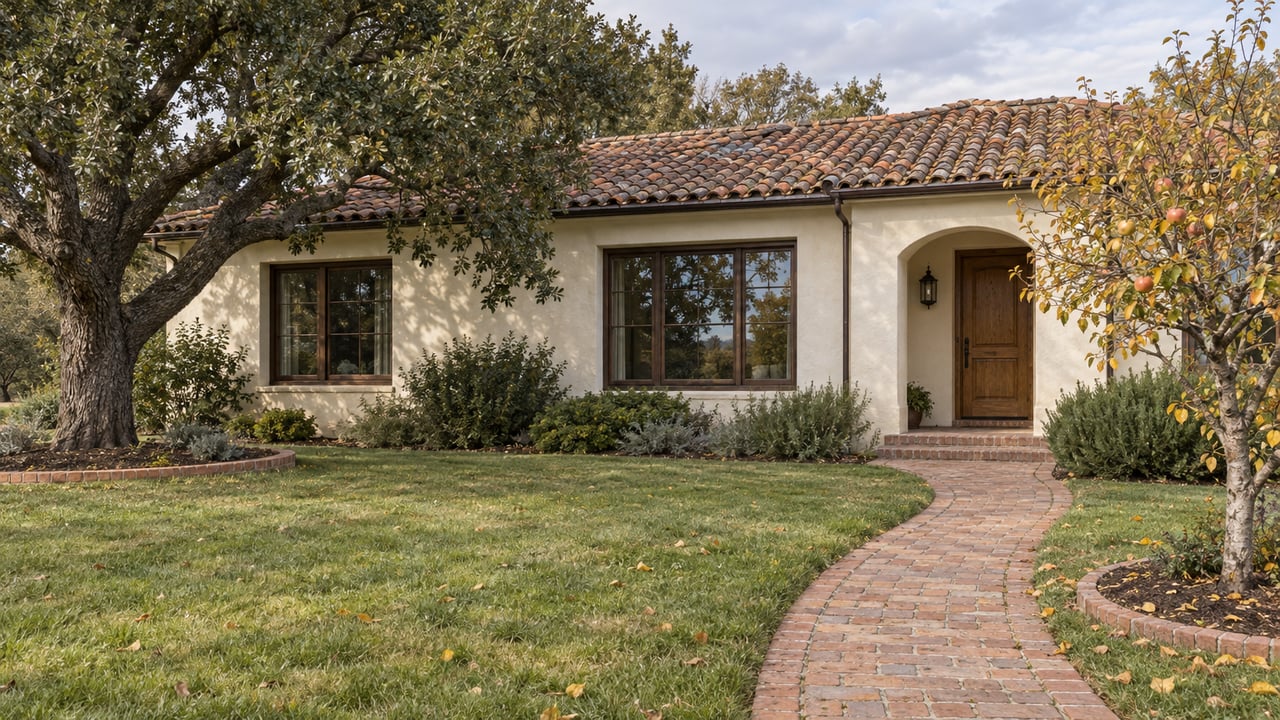
If a Corralitos listing with a few acres of Pippins is on your list this winter, Natalie Pinkerton can help you price what the trees add for you and what the ground is likely to become. Schedule a local market consultation and bring the listing.
Stay up to date on the latest real estate trends.
Get help evaluating a property’s current value, preparing a strong offer, navigating contracts, negotiating terms, and more. I’m here to guide you through every step of your home-buying journey.
NATALIE PINKERTON | CA DRE# 01943205
1041 41ST AVE SANTA CRUZ, CA 95062